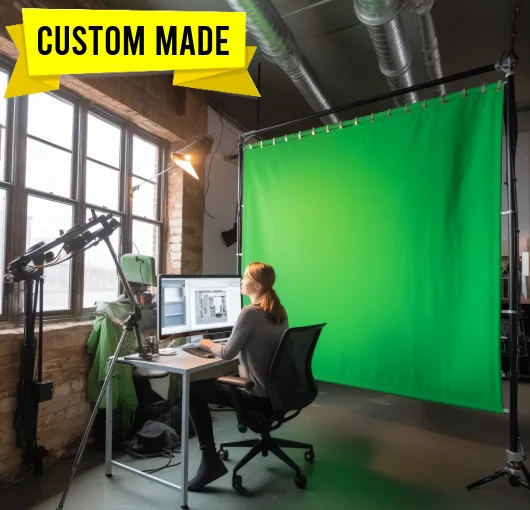
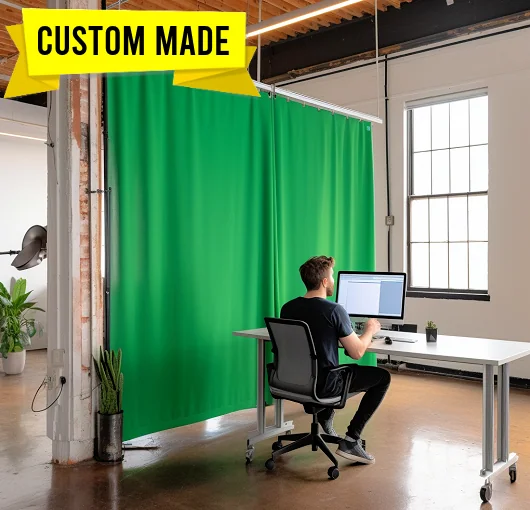
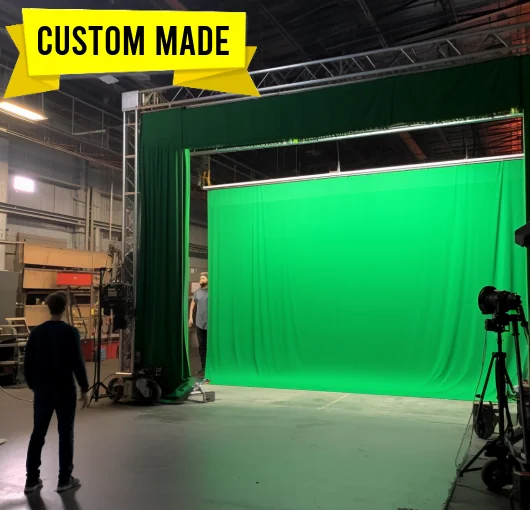
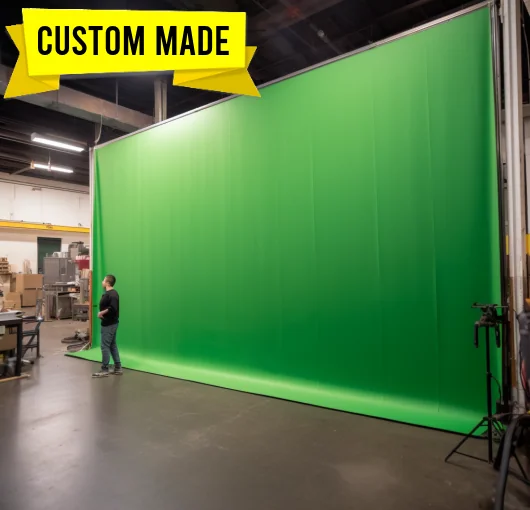
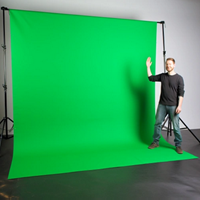
What are green screens used for?
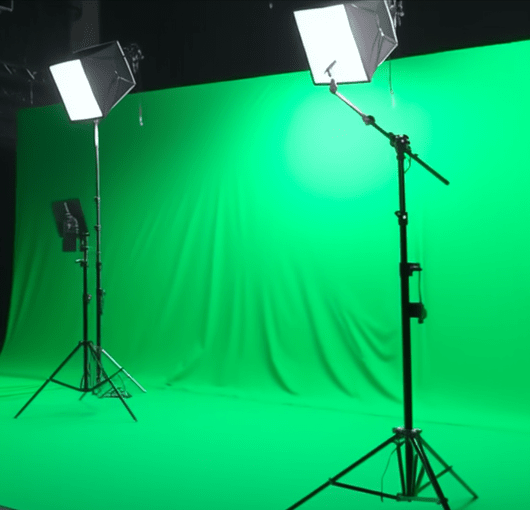
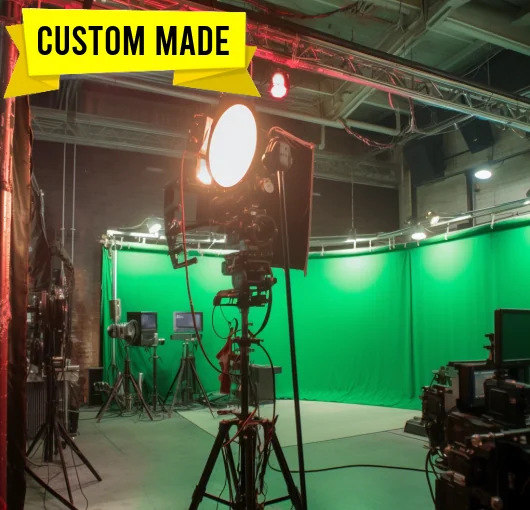
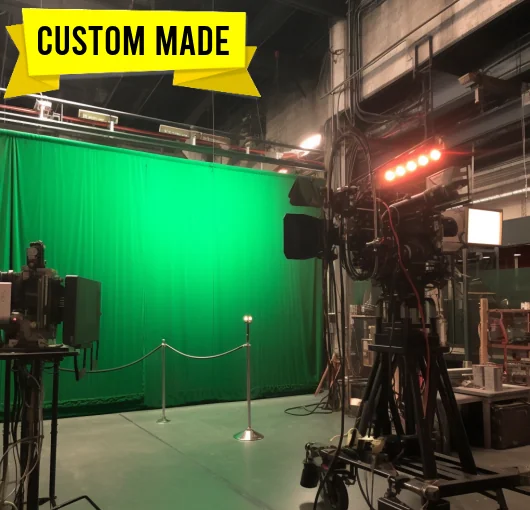
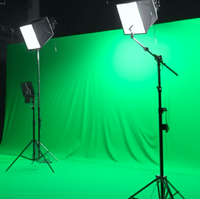
Green screens can make the background transparent and allow you to overlay images and videos on top of each other. This enables the production of special effects, such as altering an actor's location or time period or adding computer-generated imagery to a live action scene.
How much do green screens cost?
Depending on the size, quality, and features, costs can go from around $50 to potentially thousands:
- Small: between $50 and $100. These are usually 5 to 6 feet wide and made of muslin
- Medium: between $100 and $300. These are more professional and are usually 10 to 12 feet wide and made from chrome key green vinyl
- Large: These high-end green screens go for about $900 or more and include special features
What makes green screens superior when compared to other colors?
- By separating the background color (typically green or blue) from the rest of the image, filmmakers can superimpose one image or video over another. Because it is less prevalent in human skin tones and easier to distinguish from the foreground, green is frequently used
- Green absorbs light differently than white, which makes it simpler to remove shadows and evenly light the screen
- Reflections: Green is less likely to cause reflections on foreground objects because it reflects less light than white
- Noise reduction: Green produces less noise when it is captured on camera, which leads to a finished product that is cleaner and more polished
When using green screens, are there any colors I should avoid wearing?
When using a green screen, you shouldn't wear green because it will blend in and disappear from the final video. This is known as the "chroma key" and it is used to swap out a video's background for another image or video. Wearing green will cause your body to disappear and blend in with the green screen, which will look bad in the finished video. Instead, it is best to wear a color that contrasts with the green screen so that it blends in and is simple to take off.
Do all colors work or do I need specifically a green screen?
With the current video capturing technology, pretty much any color could work. Older recording tech will struggle with white though. Other colors such as blue, yellow, red, black, orange, and grey work just fine.
Can I just use green clothes or sheets instead of a green screen?
Yes, as long as it is solid with good saturation, you can use any green cloth as if it were your green screen. However, keep in mind your composite will look better the higher the green screen's quality. A green screen with many creases or an uneven color can result in a lot of difficult-to-remove shadows and color fringing in the finished composite. For the best results, it is typically best to use a high-quality, wrinkle-free green screen that is evenly lit.
Can I use green cardboard as a green screen?
It is possible to use green cardboard as a green screen, but it is likely to produce poor results. Green screens are used to create special effects in video production by allowing filmmakers to layer a subject shot against a green screen with a separate background image or video. The green screen is then replaced with the desired background in post-production, using a process called chroma keying.
For the best results, green screens should be made from a material that is as evenly lit and as smooth as possible. Cardboard is not a good choice for a green screen because it is not smooth and can have variations in its color and texture that can create shadows or uneven lighting. These imperfections can make it difficult to effectively key out the green color in post-production.
Do streamers and youtubers use green screens?
Yes. Many content creators use a green screen to recreate cool backgrounds.
Any cool green screen features?
- Chromatic keying: removing the background and replacing it with photos or videos (often news networks or streamers do this)
- Virtual backgrounds: Commonly used for streaming and video conferences by making it seem as if you are somewhere else
- Other special effects: Combining characters into scenes that were shot on different sets, making it seem like somebody is flying mid air, changing colors, and more