
Curtains for Testing & Exam Areas
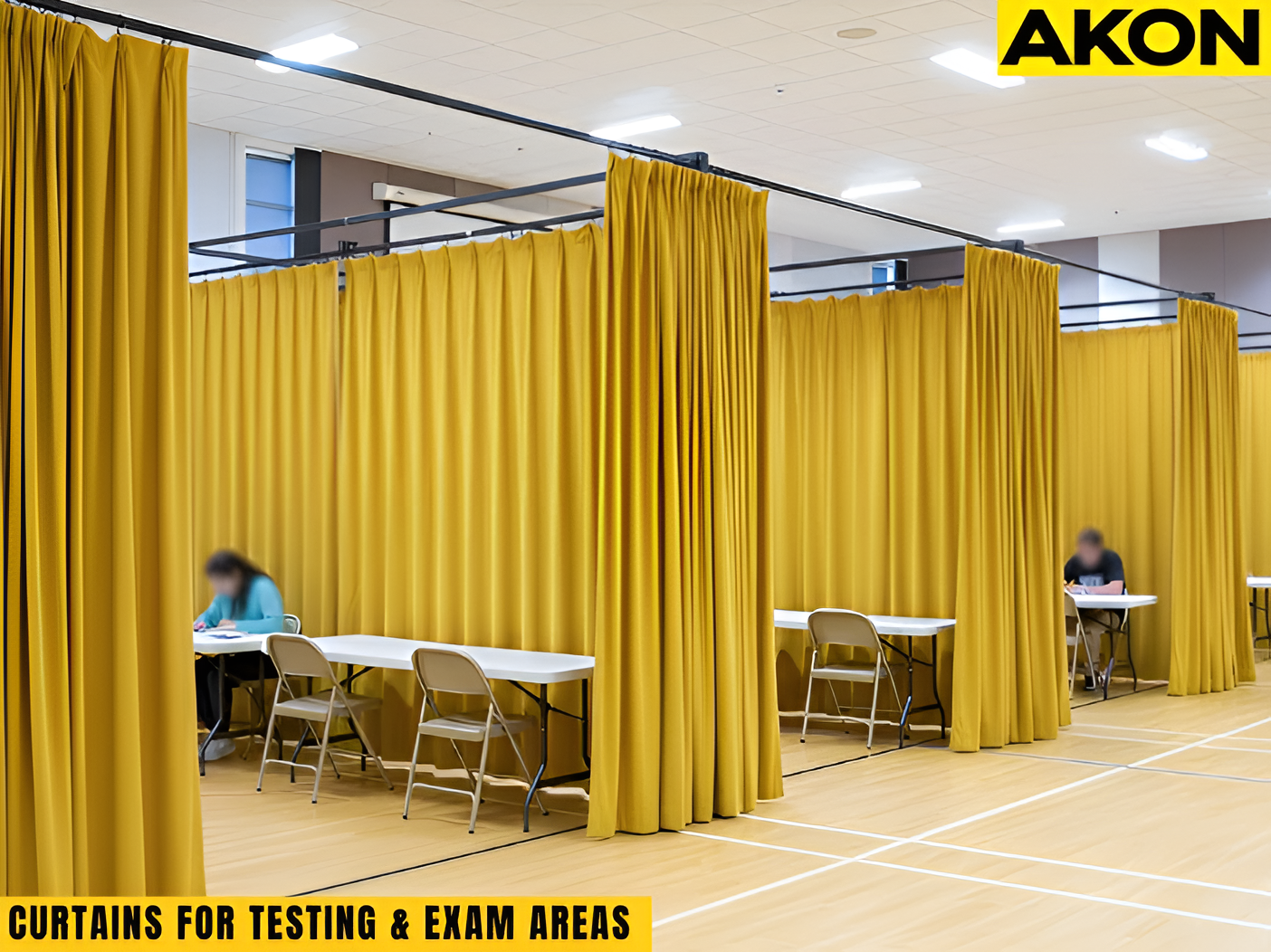
Curtains for Testing & Exam Areas are flexible partition solutions used in medical and institutional facilities to create private spaces without permanent construction. This guide explains why facilities use curtains, the key benefits for testing and exam environments, how different curtain types compare, and which solutions work best for healthcare, academic, and assessment settings.
Why Medical and Institutional Facilities Use Curtains in Testing & Exam Areas
After knowing what curtain systems are, it becomes clear why they are widely used in testing and exam environments. Facilities need solutions that support privacy and focus while allowing spaces to adjust quickly as demands change.
Supporting Privacy and Focus During Exams and Testing
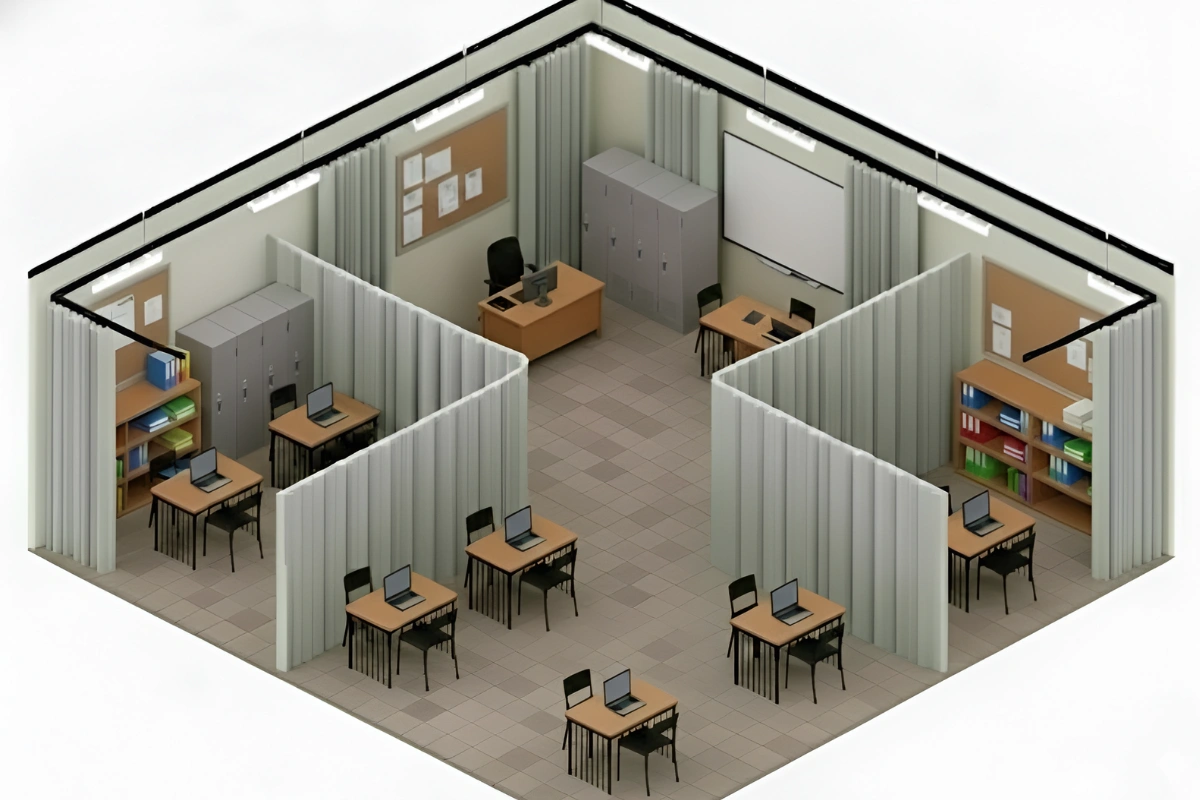
Curtains help create clear visual separation during medical exams and structured testing events. They are commonly used to set up private stations for SATs, vocational assessments, and similar evaluations where focus is important.
By reducing visual distractions, curtains help individuals concentrate during exams and testing. This separation also supports a calmer and more controlled environment in shared spaces.
Adapting Quickly to Changing Space and Capacity Needs
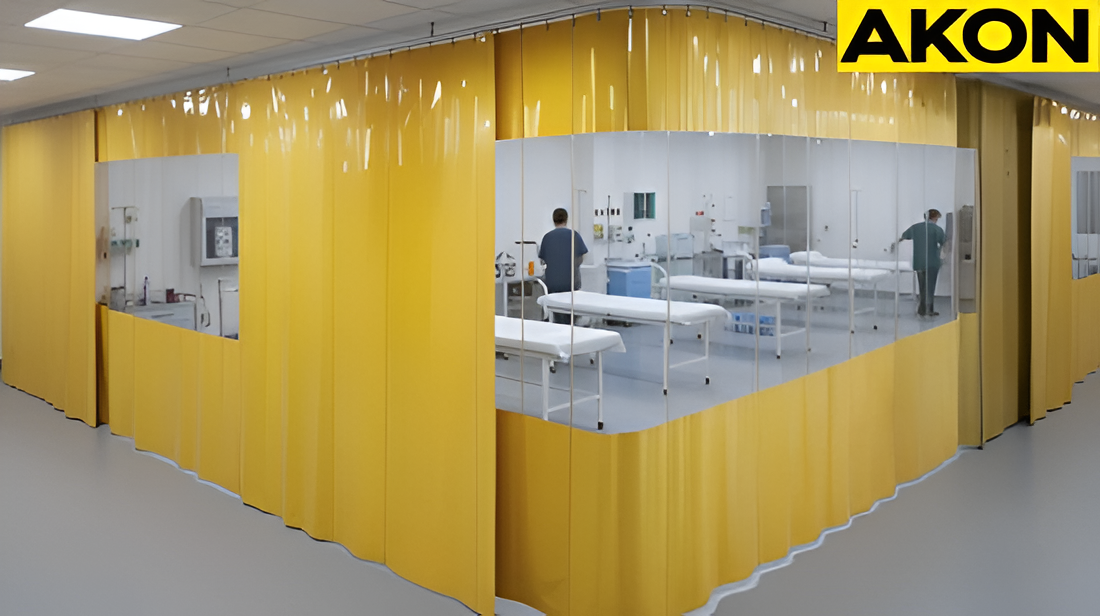
Testing and exam areas often experience shifts in volume throughout the day or during scheduled events. Curtains allow facilities to reconfigure layouts quickly for high-demand periods without disrupting operations.
They are especially useful for temporary or expandable exam setups where permanent walls are not practical. This flexibility helps facilities stay organized while responding to changing space needs.
Key Benefits of Curtains for Testing & Exam Areas
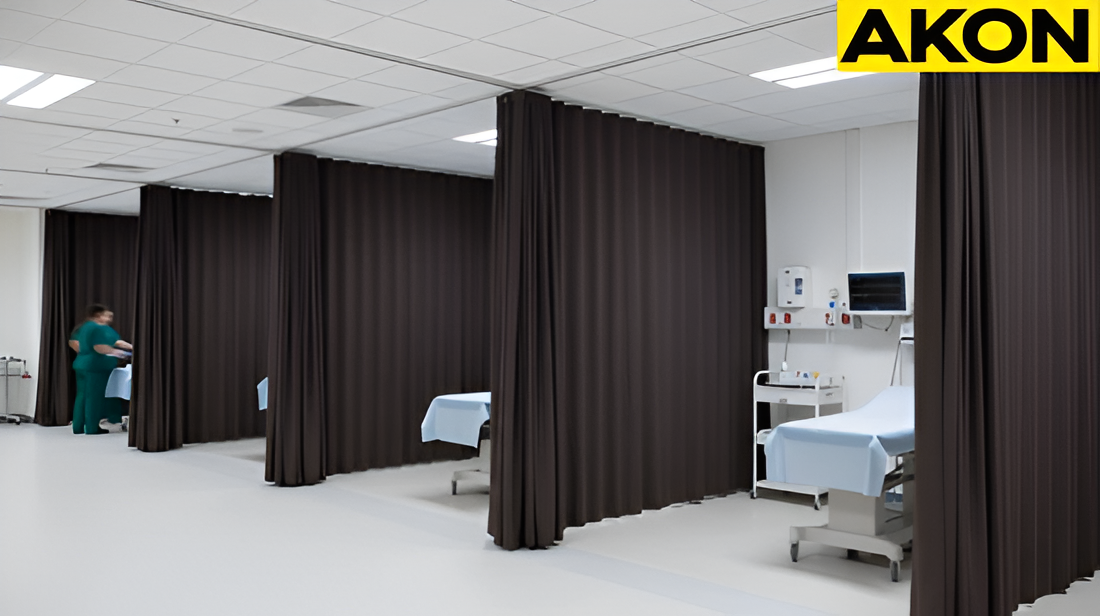
Curtain systems offer practical advantages that improve how testing and exam environments operate on a daily basis.
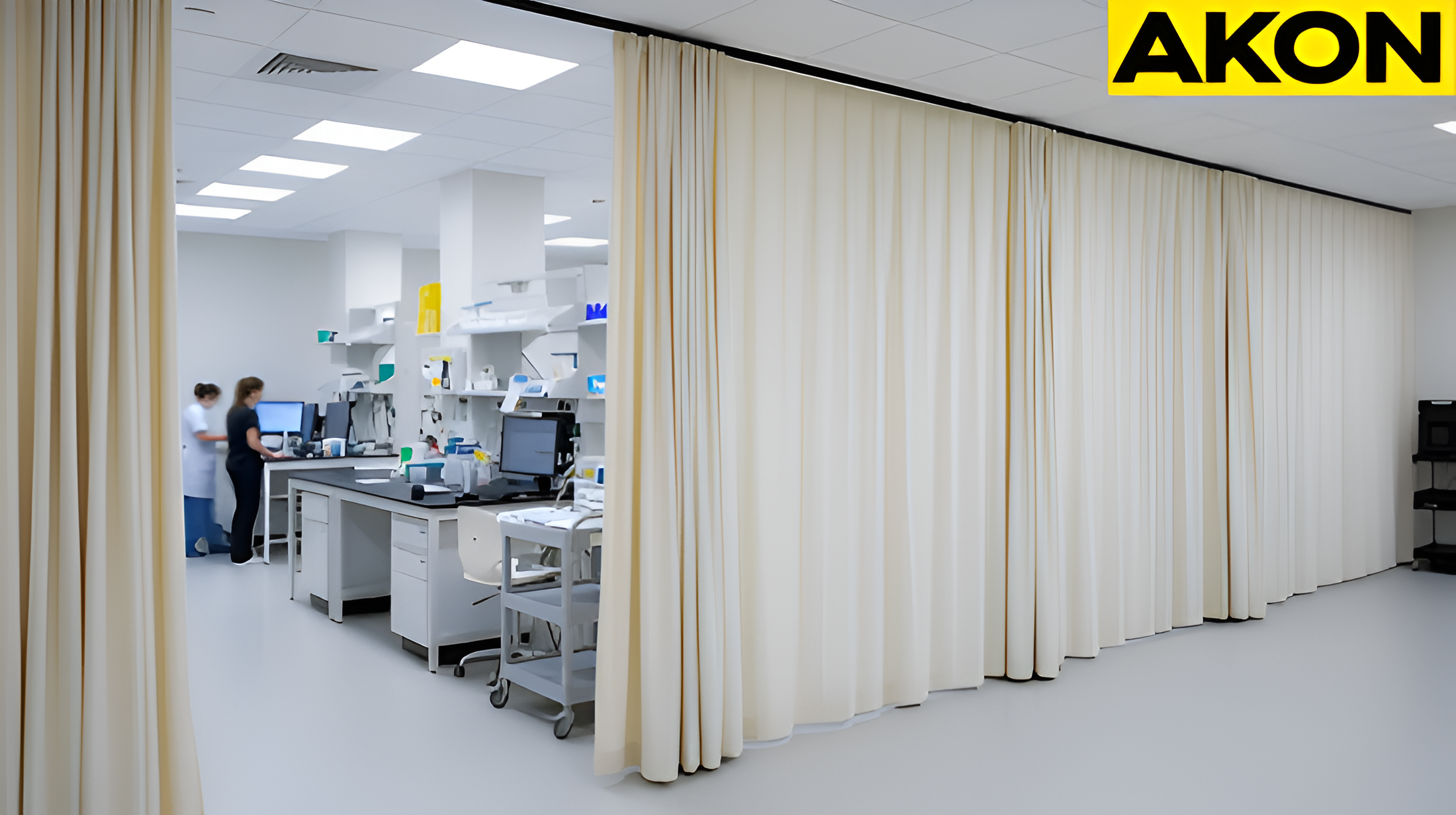
• Faster setup and breakdown. Curtains can be installed or repositioned quickly without specialized tools or lengthy preparation. This allows facilities to transition between testing formats with minimal downtime.
• Minimal impact on existing spaces. Curtain systems do not require permanent changes to walls or ceilings in most cases. This makes them well suited for buildings that host multiple uses or temporary testing events.
• Easy reconfiguration for different testing needs. Curtains can be adjusted to create individual stations, grouped areas, or open layouts as required. This flexibility supports a wide range of exams, assessments, and testing schedules.
Patient and Test-Taker Privacy & Comfort
Curtains create defined personal spaces that help patients and test takers feel more comfortable and focused in shared testing environments.
Flexible Space Configuration
Curtain systems allow facilities to adjust layouts quickly for medical testing, SATs, vocational assessments, or other events with changing space needs.
Environmental Control
Curtains help manage noise, airflow, and activity in large or shared exam areas to support concentration and organized testing conditions.
Material Options
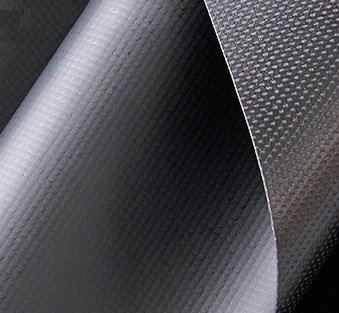
Vinyl
In areas where getting the curtain dirty is a concern we have the 18oz Vinyl curtains. Its slick surface makes it easy to clean and it is resistant to water spray. Unlike the fabric materials its surface is more reflective and shiny. This is the workhorse material that is made for less than ideal conditions. 100% Visual blackout, 90% Light blackout. $$

Fabric | Poly Stretch
Poly Stretch 6oz is a soft material commonly used in many commercial and industrial photo applications. It’s a two-way stretch fabric with zero, to minimal wrinkle and it has a flat matte finish. It is commonly used to create backdrop walls for photography of large products like automobiles. 75% Visual blackout, 50% Light blackout. $$

Fabric | Premium Velour
This luxurious 14oz fabric is ideal for stage backdrops, dividing a space or creating a high-end look with fabric. It's inherently flame resistant, lightweight and washable. It's the ideal fabric for commercial curtains that need to look great at a reasonable price. 100% Visual blackout, 90% Light blackout. $$$
Material Options
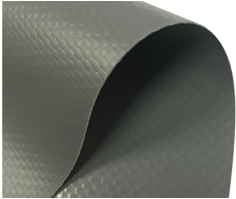
18 oz Reinforced Vinyl (standard)
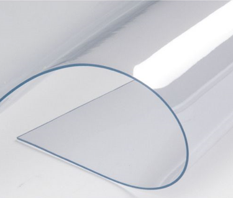
20 mil Clear PVC For Clarity

Available in Multiple Colors
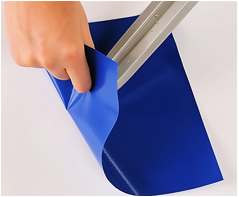
Strong Materials
Curtain Types Compared for Testing & Exam Areas
With the benefits established, the next step is understanding which curtain solution fits a specific testing or exam environment. Not all curtain systems serve the same purpose, and the right choice often depends on room size, traffic levels, and how the space is used. The comparison below outlines the most common curtain types and where each one performs best.
| Curtain Type | Best Use Case | Key Advantage | Testing / Exam Application |
|---|---|---|---|
| Extra-Large Commercial Curtains | Large shared exam or testing spaces | Designed to span wide openings and tall ceilings | SAT testing halls, vocational testing rooms, multi-station exams |
| Industrial Curtain Walls | High-traffic or semi-contained zones | Heavy-duty construction with custom sizing options | Temporary labs, screening zones, large-scale testing setups |
| Medical Privacy Curtains | Individual exam spaces | Simple and lightweight for single-station use | Exam rooms, patient screening, one-on-one assessments |
Each curtain type addresses a different layout challenge, from dividing expansive testing halls to creating individual exam stations. By selecting a system that matches the scale and demands of the space, facilities can build testing and exam environments that operate smoothly and remain easy to manage.
Recommended Curtain Solutions for Testing & Exam Facilities
Once the right curtain type is identified, selecting a specific solution helps ensure the space performs reliably during exams and assessments.
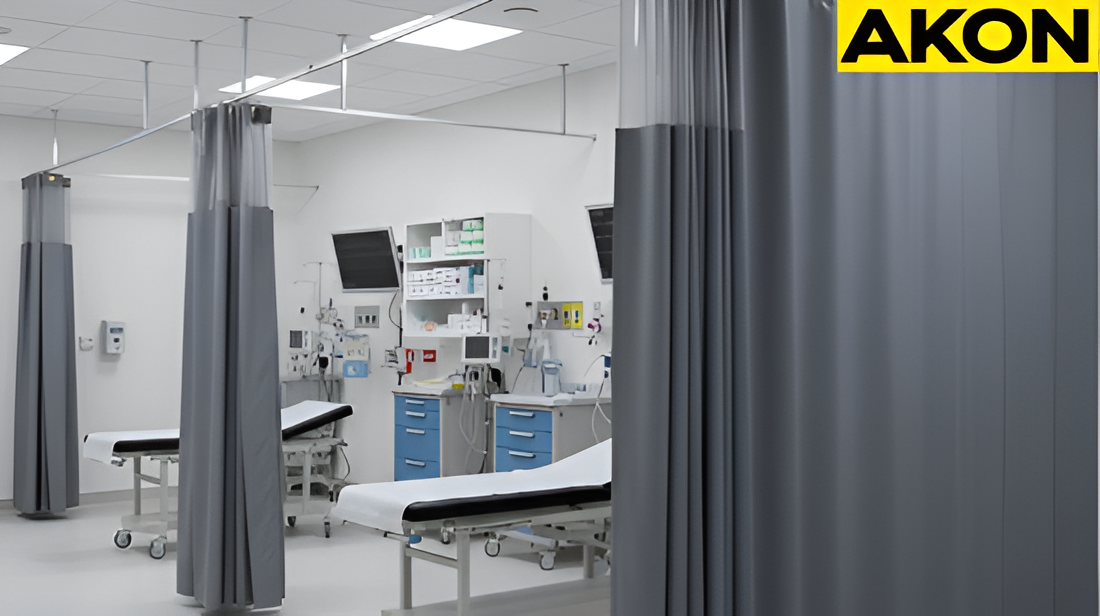
Insulated Curtain Wall
Insulated curtain walls are designed for testing environments that require a more enclosed and controlled setup. They are best suited for large testing areas or temporary medical labs where durability and structure are important.
• Ideal for large-scale testing zones that need consistent separation
• Commonly used in temporary labs and high-volume assessment events
• Custom-built to fit wide openings and tall ceiling heights
• Performs well in spaces with frequent foot traffic
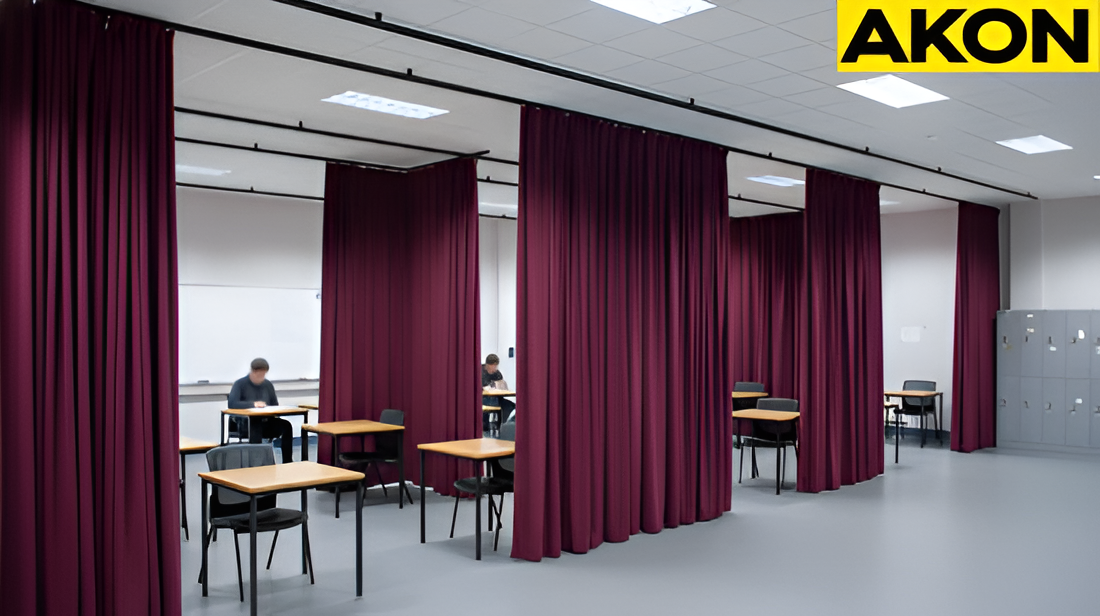
Fabric | Poly Stretch
Poly stretch fabric curtains are a practical option for facilities that need adaptable separation in shared exam spaces. They work well in environments where layouts may shift between different testing formats.
• Accommodates changing room sizes and configurations
• Frequently used in SAT testing halls and vocational assessment rooms
• Easy to reposition for different exam setups
• Offers a clean, professional look without heavy materials
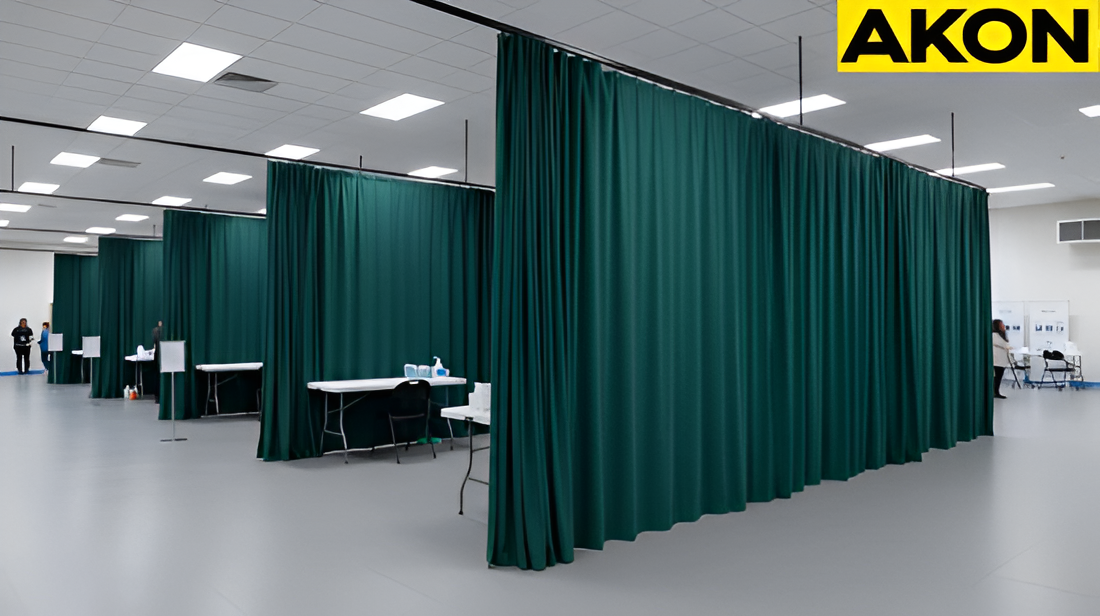
Fabric | Premium Velour
Premium velour fabric curtains are chosen when appearance and comfort play a larger role in the testing environment. They help create a more refined setting for focused assessments.
• Suitable for individual exam stations and smaller assessment areas
• Common in academic or professional testing environments
• Provides a softer visual finish for exam spaces
• Blends well into permanent or semi-permanent testing rooms
Frequently Asked Questions
FAQs: Curtains for Testing & Exam Areas
What are curtains for testing and exam areas used for?
Curtains for testing and exam areas are used to divide spaces into individual stations for medical exams, academic testing, and vocational assessments without building permanent walls.
Can curtains be used for SATs or vocational testing events?
Yes. Extra-large commercial fabric curtains are commonly used to create individual test stations for SATs, vocational assessments, and other structured exam events.
Are curtains suitable for temporary testing setups?
Yes. Insulated curtain walls and fabric curtain systems are often selected for pop-up clinics and short-term testing rooms because they can be installed and removed efficiently.
How do curtains compare to permanent exam room walls?
Curtains allow testing spaces to change as needs evolve, while permanent walls require construction and cannot be easily modified.
Do curtains help manage noise or airflow in testing areas?
Insulated curtain wall systems and extra-large fabric curtains can help limit noise transfer and guide airflow in shared testing environments.
Which curtain option works best for large testing halls or gyms?
Extra-large commercial fabric curtains and insulated curtain walls are best suited for large open spaces that need to be divided into multiple exam zones.
Are curtain systems appropriate for medical testing environments?
Yes. Insulated curtain walls are commonly used in clinics, hospitals, and temporary labs where flexible separation is needed.
Can curtains be customized to fit different room sizes?
Yes. Curtain systems are typically custom sized to match ceiling height, room width, and specific testing layouts.
Are curtains a good option for one-on-one assessments?
Yes. Premium velour fabric curtains are often used for individual exam stations where a more comfortable and refined setting is preferred.
Can curtain systems be reused for different testing events?
Yes. Poly stretch fabric curtains and other fabric systems are frequently repositioned for different exams, schedules, or room configurations.
Do curtains work for both academic and medical testing spaces?
They do. Fabric curtains and insulated curtain walls are used across schools, testing centers, clinics, and assessment facilities.
How quickly can curtains be installed for a testing event?
Installation timelines vary, but curtain systems are generally much faster to deploy than constructing permanent exam rooms.
Do curtain systems require building permits?
In most cases, no permits are required because curtain systems are not permanent structural installations.
Can curtains support high-traffic testing environments?
Yes. Insulated curtain wall systems are often chosen for testing areas with frequent staff and participant movement.
Are curtains appropriate for long-term testing setups?
They can be. Many facilities use insulated curtain walls or premium fabric curtains as long-term solutions that still allow future layout changes.
Can curtains be used alongside existing walls or partitions?
Yes. Curtain systems are commonly used to supplement existing rooms or partitions to fine-tune testing layouts.
What curtain option works best when appearance matters?
Premium velour fabric curtains are often selected for academic or professional testing environments where aesthetics are important.
Are curtains easy to store when not in use?
Most curtain systems can be retracted or stored along their track systems when testing areas are no longer needed.
Do curtain systems interfere with staff access during exams?
No. Curtain layouts are typically designed to allow staff to move between testing areas without disruption.
Are curtain systems a cost-effective option for testing facilities?
Yes. Curtains are often more cost-effective than permanent construction, especially for facilities that host recurring or temporary testing events.
Photo Gallery
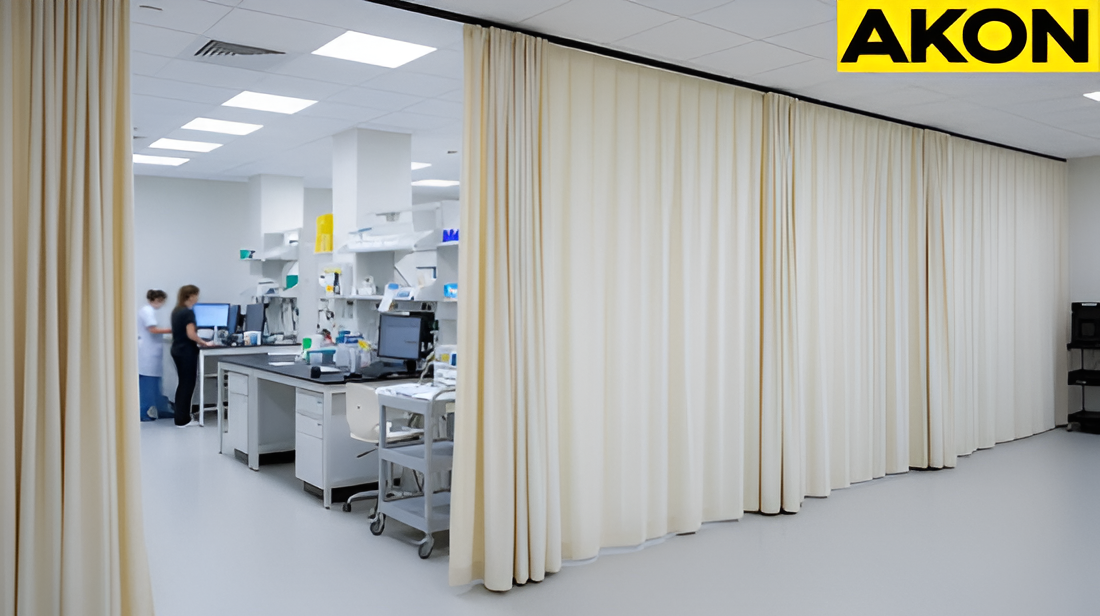
Choosing a Flexible Solution for Modern Testing & Exam Spaces
Curtain systems give medical, academic, and assessment facilities a reliable way to create organized testing environments without permanent construction. By choosing solutions that match space size, traffic flow, and exam needs, facilities can stay flexible, maintain focus, and adapt layouts as requirements change, all while keeping operations efficient and easy to manage.
Divide Testing and Exam Spaces
Build Yours Online
Related Products
Industrial Blackout Curtains

Church Divider Curtains

Photo Booths
Extra Large Curtains
Freestanding Fabric Curtains