
Fabric Curtains for Laundry Room Separation
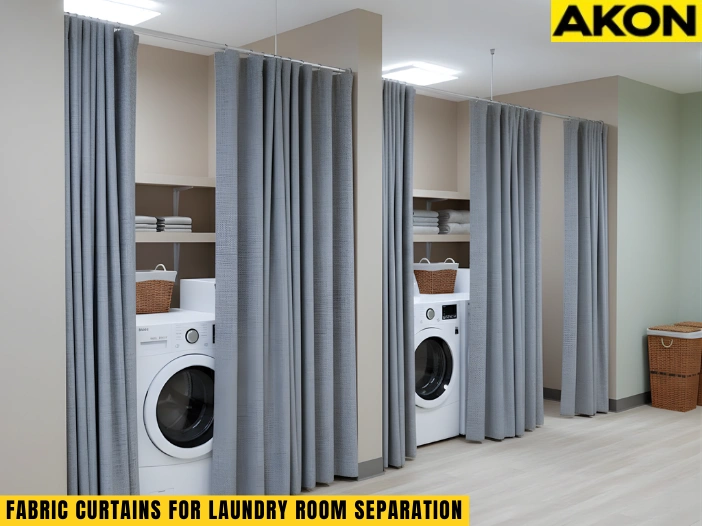
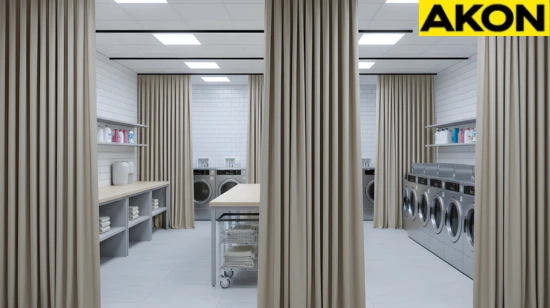
Fabric Curtains for Laundry Room Separation are soft, flexible fabric systems used to visually and functionally divide laundry areas in hospitality and residential settings. Common in hotels, apartments, dorms, and shared housing, they help hide shared or commercial laundry rooms while addressing noise, heat, moisture, and visual clutter without permanent walls.
Why Fabric Curtains Are Used for Laundry Room Separation
Laundry rooms in hospitality and residential buildings need to stay accessible while remaining discreet. When these spaces sit close to guest areas or living zones, thoughtful separation becomes essential for comfort and appearance.
Challenges with Shared Laundry Rooms in Living and Guest Spaces
In hotels, apartments, dorms, and shared housing, laundry rooms are often located near hallways, common areas, or living spaces. While necessary, these utility areas can introduce ongoing noise, heat, and movement into nearby environments.
Without proper separation, laundry rooms may feel intrusive and interrupt the comfort of guests or residents. Over time, this can negatively affect how the space looks, feels, and functions on a daily basis.
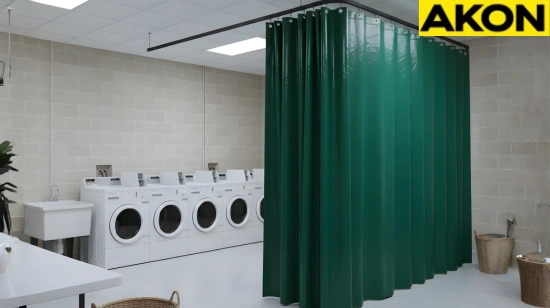
Why Fabric Curtains Are a Practical Alternative to Permanent Walls
Fabric curtains provide a flexible way to separate laundry rooms without altering the building structure. They install quickly, cost less than construction, and require minimal disruption in occupied spaces.
Curtains can be opened, closed, or repositioned as needs change throughout the building. This adaptability allows property managers to improve comfort and appearance without committing to permanent walls.
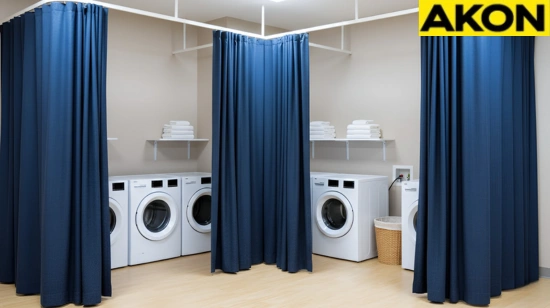
Key Benefits of Fabric Curtains in Laundry Rooms
Fabric curtain systems help hospitality and residential spaces conceal laundry areas while improving comfort and usability. The benefits below are designed to be easy to scan and focused on everyday livability.
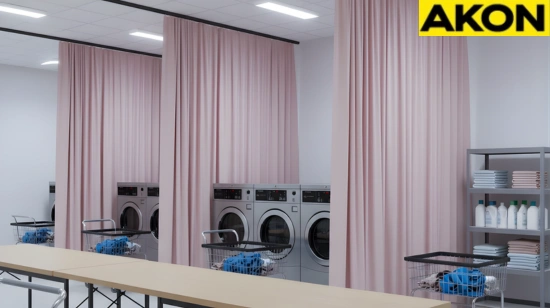
• Improved traffic flow. Fabric curtains allow easy entry and exit without bulky doors. This keeps shared areas from feeling crowded during busy times. It also helps staff and residents move through the space more efficiently.
• Adaptable layouts. Curtain systems make it easy to adjust how a space is used. Laundry areas can be opened, closed, or reconfigured as needs change. This flexibility works well in buildings with evolving layouts.
• Minimal visual disruption. Soft fabric creates separation without overwhelming the space. Curtains blend naturally into hospitality and residential interiors. This helps maintain a clean, cohesive look while keeping laundry areas out of sight.
Heat and Moisture Control
Curtains help contain heat and humidity produced by washers and dryers. This limits how far warmth and moisture spread into nearby rooms.
Flexible Space Separation
Fabric curtains visually hide laundry rooms from guest or living areas. They create soft, non-permanent boundaries that blend naturally into interiors.
Noise Reduction
Thick fabric materials help dampen laundry equipment noise. This is especially helpful in shared residential and hospitality settings
Material Options
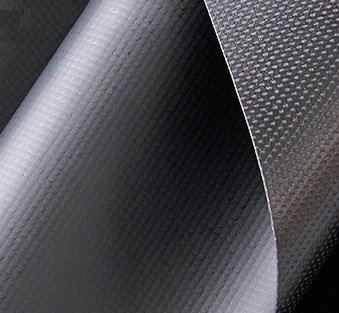
Vinyl
In areas where getting the curtain dirty is a concern we have the 18oz Vinyl curtains. Its slick surface makes it easy to clean and it is resistant to water spray. Unlike the fabric materials its surface is more reflective and shiny. This is the workhorse material that is made for less than ideal conditions. 100% Visual blackout, 90% Light blackout. $$

Fabric | Poly Stretch
Poly Stretch 6oz is a soft material commonly used in many commercial and industrial photo applications. It’s a two-way stretch fabric with zero, to minimal wrinkle and it has a flat matte finish. It is commonly used to create backdrop walls for photography of large products like automobiles. 75% Visual blackout, 50% Light blackout. $$
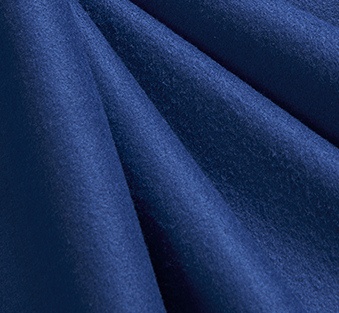
Fabric | Premium Velour
This luxurious 14oz fabric is ideal for stage backdrops, dividing a space or creating a high-end look with fabric. It's inherently flame resistant, lightweight and washable. It's the ideal fabric for commercial curtains that need to look great at a reasonable price. 100% Visual blackout, 90% Light blackout. $$$
Material Options
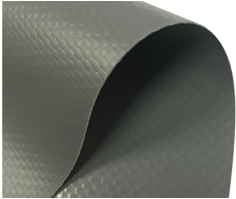
18 oz Reinforced Vinyl (standard)
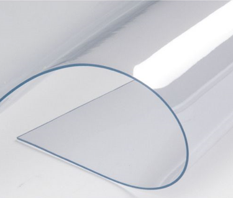
20 mil Clear PVC For Clarity
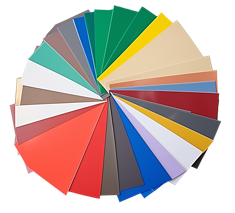
Available in Multiple Colors
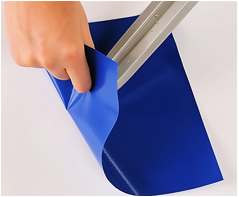
Strong Materials
Curtain Options for Laundry Room Separation
After knowing the benefits, the next step is selecting the curtain type that best fits your setting. The comparison below is designed to help hospitality and residential decision-makers choose based on location, usage, and overall experience, rather than technical details.
| Curtain Type | Best Use Case | Key Material Features | Laundry Room Benefits |
|---|---|---|---|
| Extra Large Commercial Curtains | Hotel or apartment laundry areas near guest spaces | Soft, heavy fabric with custom sizing | Provides full visual coverage while helping manage noise and heat |
| Industrial Curtain Walls | Back-of-house or shared-use laundry rooms | Reinforced vinyl or polyester materials | Built for durability, moisture resistance, and easy cleaning |
| Commercial Fabric Curtains | Residential or light-use shared laundry rooms | Lightweight yet durable fabric | Offers a cost-effective way to discreetly separate laundry areas |
Each option serves a different purpose. By focusing on where the laundry room is located and how often it is used, property managers and homeowners can select a curtain solution that fits both the space and the level of comfort they want to maintain.
Recommended Fabric Curtain Solutions for Laundry Rooms
After knowing the available curtain types, the next step is selecting a specific solution that fits how your laundry space functions and how visible it is to guests or residents.
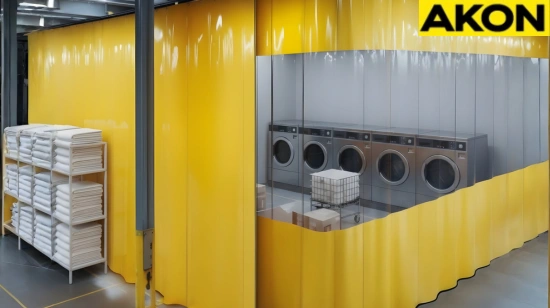
Insulated Curtain Wall
The Insulated Curtain Wall is designed for laundry areas where comfort control is especially important. It offers a more substantial feel while still maintaining flexibility and ease of installation.
• Provides added insulation to help manage sound and temperature in active laundry rooms
• Creates a more solid separation without the permanence of constructed walls
• Works well in hospitality or mixed-use residential buildings with shared facilities
• Ideal for spaces where comfort control is a priority
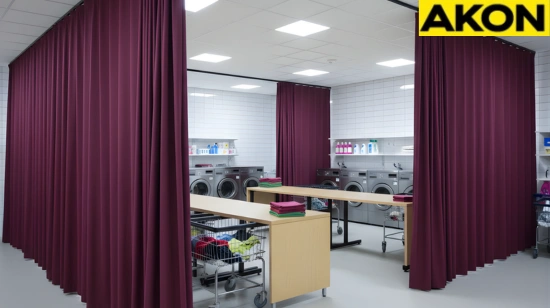
Fabric | Poly Stretch
Poly Stretch fabric is a practical choice for laundry rooms that need wide coverage with a clean, modern look. It combines flexibility with structure, making it well suited for shared-use environments.
• Designed to span wide openings while maintaining a smooth appearance
• Holds its shape well, helping laundry areas stay neat and organized
• Fits shared-use or back-of-house laundry spaces in apartments or dorms
• Offers a balance of durability and visual softness
Fabric | Premium Velour
Premium Velour is chosen when appearance plays a larger role in the overall space. Its softer texture helps laundry areas blend more naturally into guest-facing or residential interiors.
• Delivers a refined look for hospitality or upscale residential settings
• Enhances visual separation while keeping utility spaces discreet
• Blends naturally into interiors where aesthetics matter
• Best suited for properties that prioritize presentation and comfort
Frequently Asked Questions
FAQs: Fabric Curtains for Laundry Room Separation
Are fabric curtains suitable for hiding laundry rooms in hotels or apartments?
Yes. Fabric curtain systems are commonly used to screen shared or commercial laundry rooms in hotels, apartments, dorms, and residential buildings. Options like Fabric | Premium Velour are often selected where appearance matters.
What type of curtain works best for guest-facing laundry areas?
Soft fabric options such as Fabric | Premium Velour are typically chosen for guest-facing areas. They provide visual separation while maintaining a clean, refined look.
Do fabric curtains help reduce laundry room noise in residential buildings?
Fabric curtains can help soften noise by adding a layer of separation between laundry equipment and nearby spaces. Heavier solutions like an Insulated Curtain Wall are often used when additional sound control is needed.
Can fabric curtains help manage heat from washers and dryers?
Curtain systems can help limit how heat spreads beyond the laundry area. Insulated Curtain Wall systems are commonly selected when temperature control is a concern.
Are fabric curtains effective for controlling moisture in laundry rooms?
Some curtain materials are better suited for moisture-prone environments than others. Industrial-style curtain wall systems are often chosen in shared or high-use laundry spaces where moisture exposure is more frequent.
How do I choose the right curtain size for a shared laundry room?
Curtain sizing is based on the full width and height of the opening being covered. Custom-sized solutions are often recommended to ensure proper coverage and a finished appearance.
What is the difference between soft fabric curtains and industrial curtain walls?
Soft fabric curtains focus on visual separation and interior appearance. Industrial curtain walls are designed for heavier use and are commonly used in utility or back-of-house laundry areas.
Are fabric curtains easy to clean in apartment or hotel settings?
Yes. Many fabric curtain systems are designed for routine cleaning and straightforward maintenance. Material choice helps determine how often cleaning is needed.
Can fabric curtains be opened and closed throughout the day?
Curtain systems are designed for smooth operation and frequent use. This allows staff or residents to access laundry rooms easily when needed.
Are fabric curtains a good option for occupied buildings?
Yes. Fabric curtain systems are often chosen because they can be installed with minimal disruption. This makes them suitable for hotels and residential buildings that remain in use.
What curtain option works best for wide laundry room openings?
Extra large fabric curtain systems and Poly Stretch materials are commonly used for wide openings. These options help maintain a clean appearance without sagging.
Can fabric curtains be customized to match interior finishes?
Many fabric options are available in different colors and textures. This allows the curtain system to blend naturally with surrounding interiors.
Are fabric curtains safe to use near laundry equipment?
When properly specified, fabric curtain systems are suitable for use near laundry equipment. Selecting the appropriate material helps ensure safe and reliable performance.
Can fabric curtains be used in mixed-use residential buildings?
Yes. Fabric curtain systems are often used in mixed-use buildings where spaces may change function over time. Their flexibility makes them easy to adapt.
How long do fabric curtains typically last in shared laundry areas?
Longevity depends on material choice, usage frequency, and maintenance. Durable fabric and curtain wall systems are often selected for higher-use environments.
Do fabric curtains require special hardware or track systems?
Most curtain systems use ceiling-mounted or wall-mounted tracks designed for smooth movement. The hardware is selected based on curtain weight and usage.
Can fabric curtains be replaced or updated later on?
Yes. One advantage of curtain systems is the ability to replace or upgrade the fabric without altering the surrounding structure.
Are fabric curtains suitable for both residential and commercial laundry rooms?
Different fabric and curtain wall options are available for both settings. The choice depends on how frequently the space is used and how visible it is.
How do fabric curtains compare to temporary screens or folding panels?
Fabric curtains provide broader coverage and a more integrated look. They are better suited for fixed openings than portable screens.
When should a property choose an insulated curtain wall instead of soft fabric?
Insulated curtain walls are typically chosen when sound or temperature control is a higher priority. They are often used in shared or back-of-house laundry areas.
Photo Gallery
Bringing Comfort and Visual Order to Shared Laundry Areas
Fabric curtains offer a simple, flexible way to keep shared or commercial laundry areas out of sight while maintaining comfort and visual order. In hospitality and residential settings, they help spaces feel calmer, cleaner, and more intentional without permanent construction. By choosing a curtain solution that fits how the space is used and how visible it is, property owners can improve everyday livability while keeping laundry areas discreet and functional.
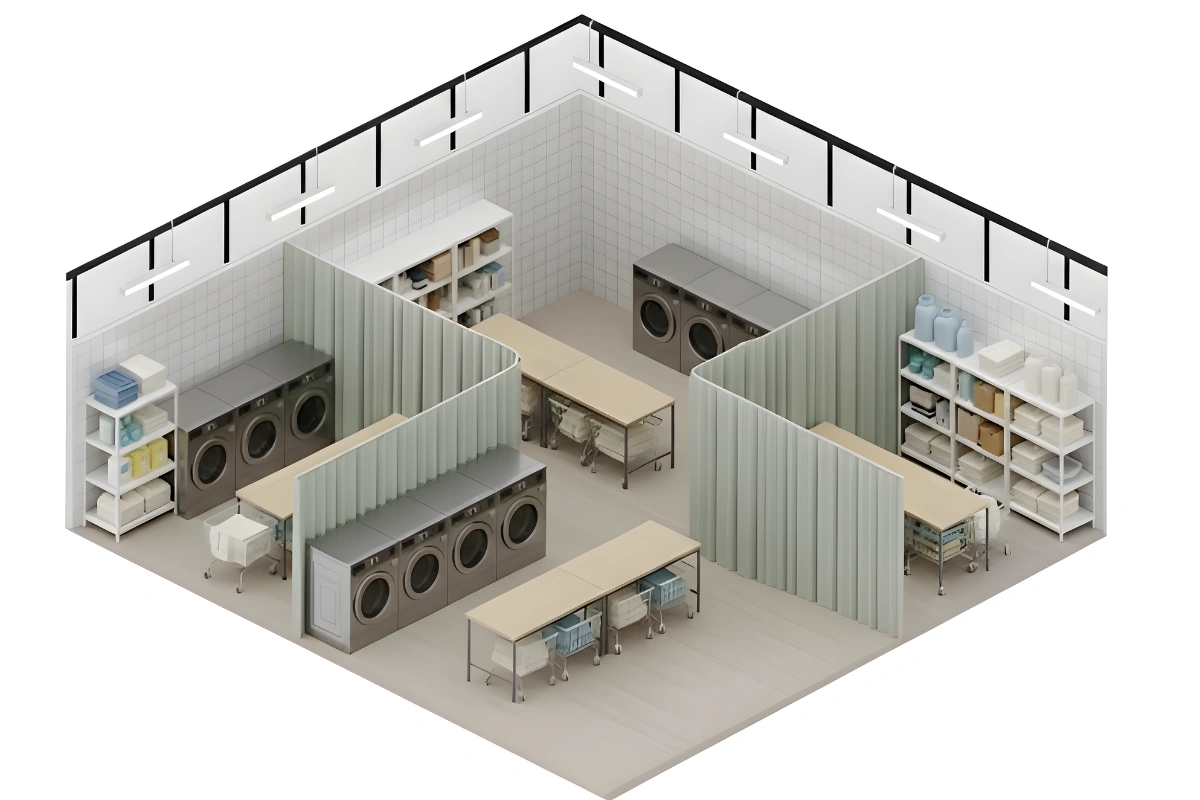
Organized Laundry Zones
Build Yours Online
Related Products
Industrial Blackout Curtains

Church Divider Curtains

Photo Booths
Extra Large Curtains
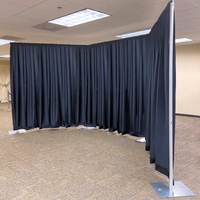
Freestanding Fabric Curtains